
Stone Age Workstations
Stone Age Survival Game Development Blog

Stone Age Workstations
An area was set aside to hold the tools to do specific tasks, keep the tools and materials in there.
Let’s look at the archeological finds to try to figure out what workstations are necessary.
Hunting-Related Workstations
Butchery Area
A place to hang up the carcass for processing. Everything extracted from an animal carcass was usable.
Tools used: cleavers, scrapers, knives, hammerstones.
Most usable extracts:
Pelts, hides and furs for clothing and construction.
Bones and antlers for construction and tools.
Meat and fat for cooking.
Sinew for the most durable cords at the time.
Bladder and stomach were used as water containers.
Intestines were used as highly tensile cordage. Example for construction.
Hooves and scraps were boiled to create animal glue.
Teeth were often used as a jewelry, especially predator teeth.
Any sharp object can be used to scrape the meat and most of the fat out of the pelt/hide/fur before it can be tanned. Scraper was the best tool for this job:

Video: Butchering a bison with stone age tools
Tanning Rack
If the pelts, hides or furst were unprocessed, they would dry and crackle and did not last particularly long.
Some of the first tanning methods are over 300.000 years old.
The animal skin was stretched, meat and most of the fat was scraped off.
The “tanning” itself was likely brain-tanning (using the fatty acids of the animal’s own brain to preserve the skin) and smoking the hides over a hearth to prevent decay. The actual leather is still thousands of years away (no earlier than 3500 BCE).
So tanning area needs animal brains, fireplace and some way to stretch the pelt/hide/fur.
More about tanning in the clothing and fashion post.

Video How To Tan A Hide The Stone Age Way!
Sewing Area
Wood, bone or antler needles and thin cords were used for sewing. There is another post about clothing and fashion.
Tools used: cord made of various plants or sinew. Sinew was the most durable and weather-resistant material. Bone needles. Cutting tools like sharpened pebbles and rocks, stone knives and cleavers.
Sewing area did not have any specific structure, it just needed to be indoors to be protected from elements, some kind of storage option and perhaps somewhere to hang the clothing.

Whetstone
This is where the cutting tools, needles and spears were processed, either to sharpen or shape them.
Pebbles, stones and rocks were used as raw materials, sharpened arrowheads, knifeheads, scrapers, handaxes, hammerstones came out.
Many minerals are good whetstones: sandstone, quartzite, siltstone etc.
Portable whetstones were also used. It took longer to sharpen the tools with them, but they did work.
Polissoirs (Fixed Sharpening Stones) were large rocks with the right minerals that were used as stationary sharpening stones. Most of the finds are from neolithic era but the spears and arrows were sharpened before that so we can presume they were also used before neolithic.

Gathering-Related Workstations
Woodworking Area
This is where the handles for tools, spears, atlatls, drill-bow, bow and arrows were created.
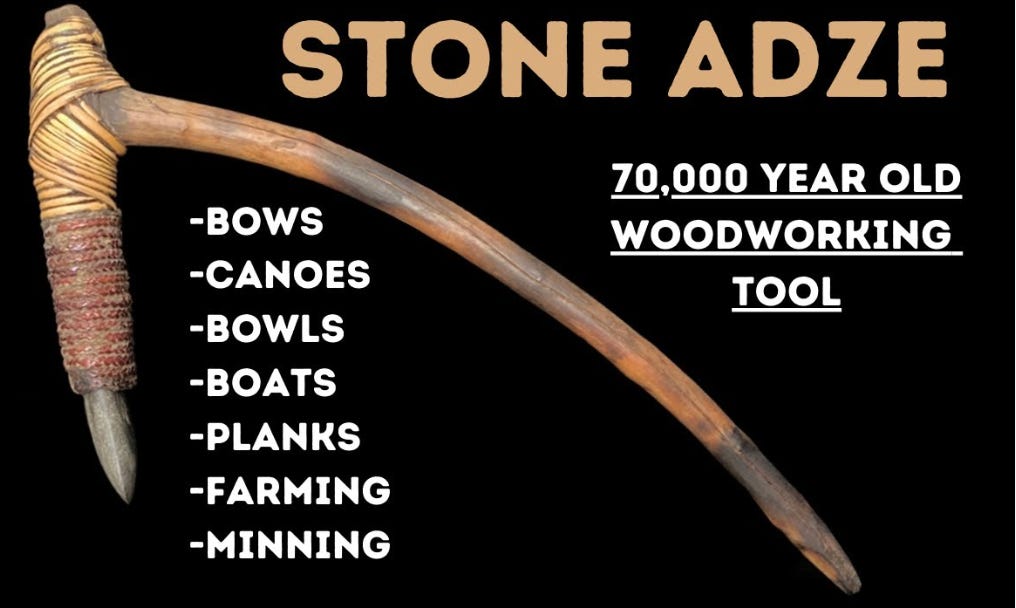
Tools used: any kind of sharp tools to work the wood. Adze was “the tool” for working with larger objects.
Drying and Smokig Racks
Berries, mushrooms, meat, fish, nuts - everything edible could be smoked or dried.
Both of these methods are still widely used today.
Smoking and drying food was “invented” all over the planet, anywhere where homo sapiens lived. Let’s say it’s just “common sense”.

Cordage Loft
In order to make cord and rope from various materials, separate area is needed.
Cord can be made by hand by using just few sticks as tools. Rope is a bit more complex to make it well.

Video explaining how cords can be made without modern machinery
Water Collector
To collect rainwater - any kind of hole or container can be used.
Either a waterhole with stones, or a container made of hollowed-out log was used.
Humans have always tried to build their settlements near a running water, which makes the whole ordeal easier.

Storage
Root Cellar to store food as a concept is over 12.000 years old. The food placed inside the ground remained at a stable temperature and humidity levels, allowing food to be stored longer. Since it wasn’t quite a “root cellar”, let’s call it “Food Pit”.
The rest of the materials were just probably placed under a roof to protect from the elements. Let’s just call it a “stockpile”.

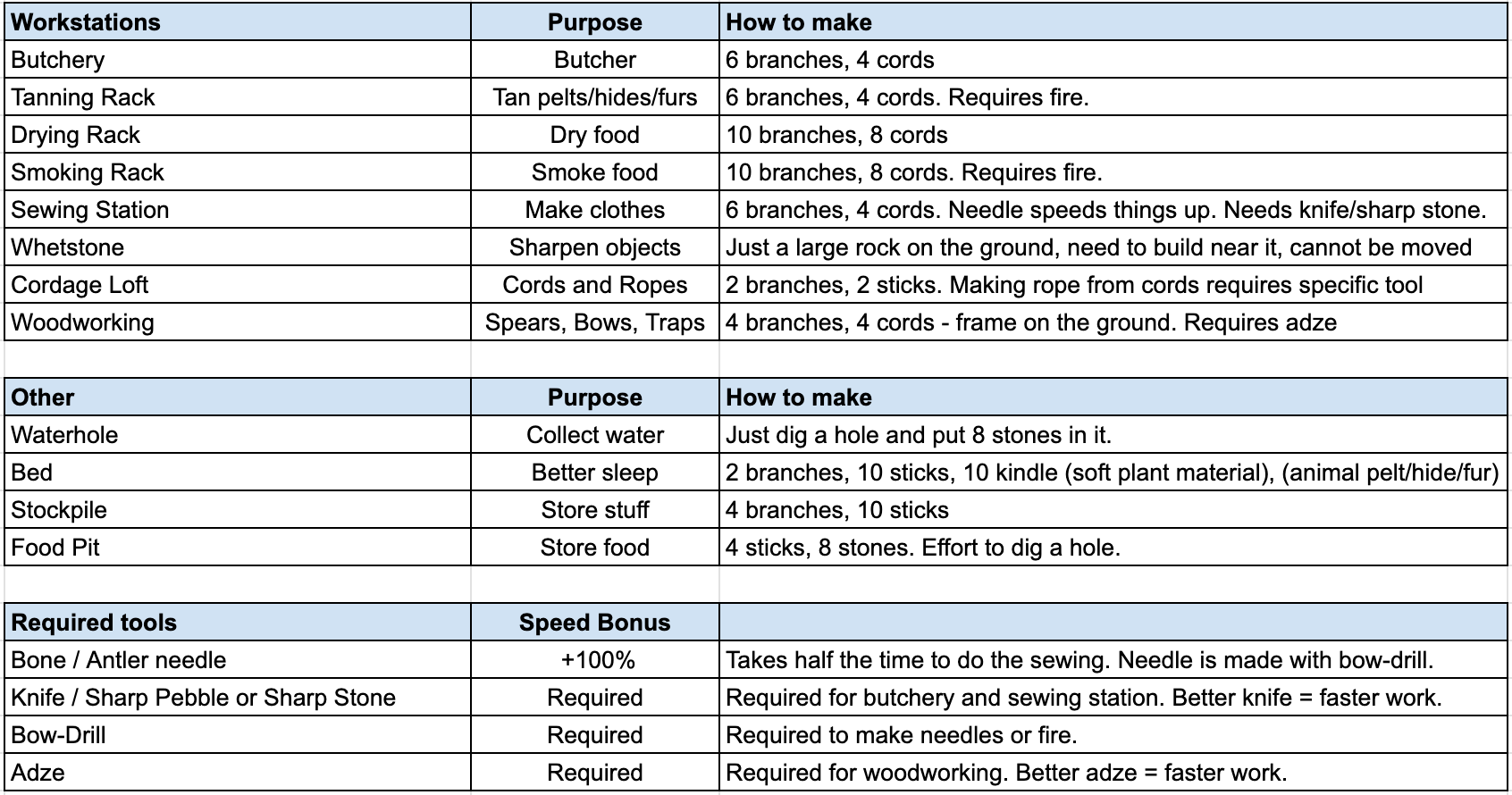
Building options to be created in the game
So these will be the workstations that can be put into the buildings.
Next: Stone Age Music & Singing